
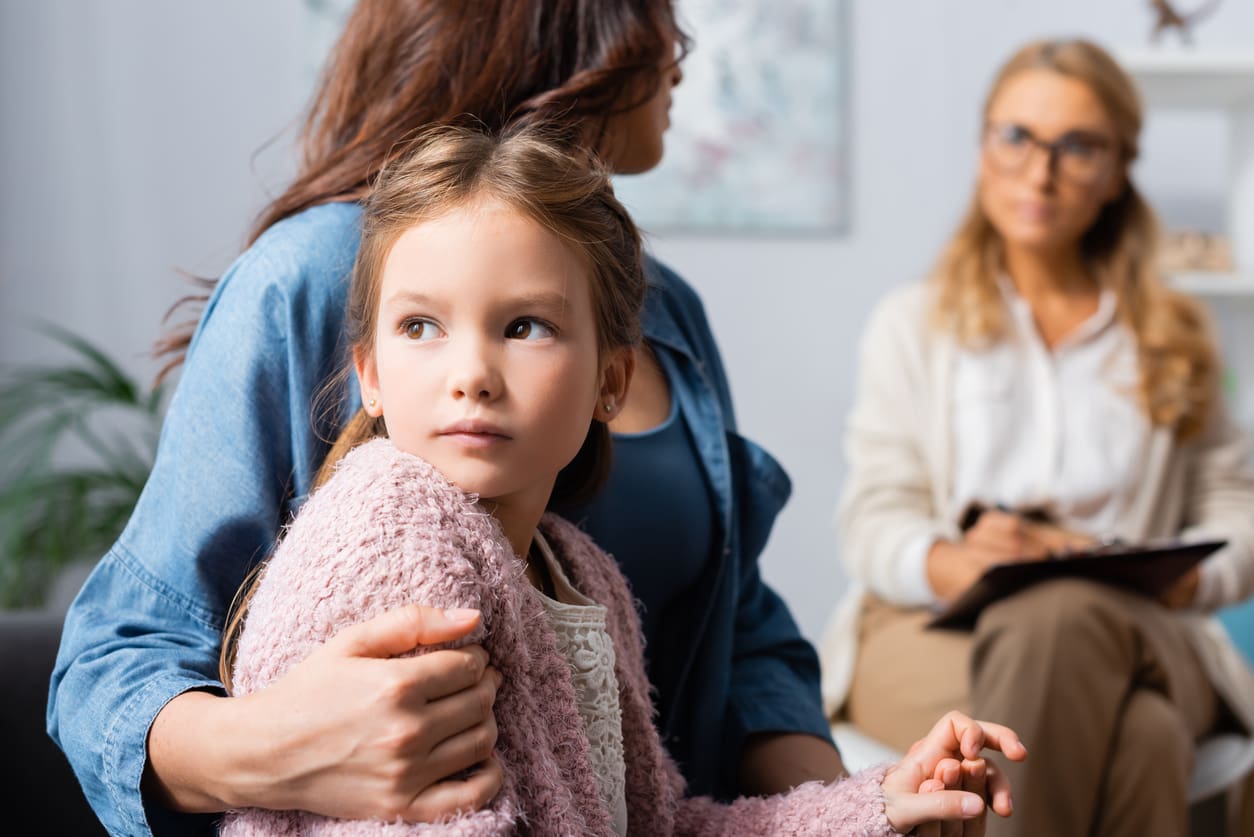
Every May, Mental Health Awareness Month invites us to look honestly at how our families are doing. In 2026, the answer for America’s young people is sobering.
According to the CDC, roughly 40% of high school students report persistent feelings of sadness or hopelessness. For teen girls, that number climbs to 53%. Mental Health America reports that 3 out of 5 adolescents living with major depression never receive any care at all. The U.S. Surgeon General has called the youth mental health crisis a national emergency.
This year’s Mental Health America theme is More Good Days, Together. It is a quiet, hopeful framing for a heavy moment. It asks each of us to consider what a good day actually looks like for a child, and what it would take to make more of them possible.
For 170 years, Maryvale has asked this question—and the answer begins with something often overlooked: a safe place to sleep. We provide whole-person care for families in the San Gabriel Valley through trauma-informed, mental health, and community-based services.
The variable most mental health headlines leave out
Most coverage of youth mental health this year centers on screen time, school pressure, and the national shortage of therapists. These are real factors. But there is another one, less visible and more decisive, that shapes a child’s mental health long before any therapist enters the picture.
It is housing.
A February 2026 research highlight from the National Institutes of Health found that severe housing insecurity in early childhood is directly linked to elevated depression risk in young adulthood. The researchers concluded that addressing housing insecurity early in childhood offers promise for preventing depression later in life.
A separate peer-reviewed study found that youth facing housing instability are 42% more likely to experience anxiety and 57% more likely to experience depression, while also being significantly less likely to receive any mental health treatment. The National Low Income Housing Coalition reports that evictions and the inability to pay rent are associated with worse mental health outcomes and sleep disturbance in children, even though those children are not the ones paying the bills.
The most striking number is this: an estimated 78% of children facing homelessness struggle with at least one mental health condition. Fewer than one in three of them receive treatment.
A child cannot process what is happening inside her if she does not know where she will sleep tonight. A mother cannot keep a counseling appointment if her family is moving between cars and couches. Mental health care, no matter how skilled the clinician, requires a stable foundation underneath it.
What makes Maryvale different
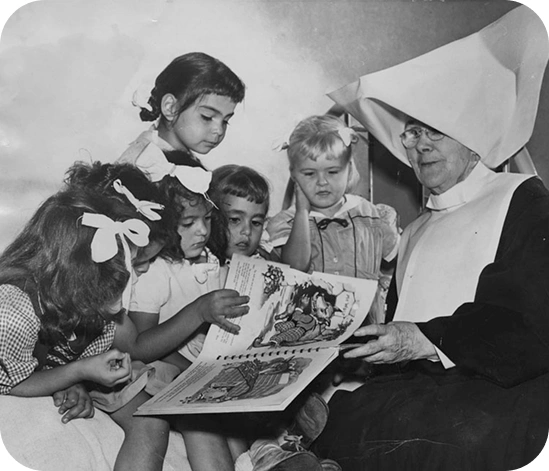
Maryvale was founded in 1856 by the Daughters of Charity to care for the orphaned children of Los Angeles. Across nearly two centuries, our mission has expanded in step with what families in the San Gabriel Valley actually need. Today, our three campuses in Rosemead, Duarte, and South El Monte deliver three things, together, on one mission:
- Early childhood education for children from birth to five
- Mental health and counseling services for children, adolescents, and families
- Stable, supportive housing for mothers and their young children
Most organizations offer one of these. A few offer two. Maryvale offers all three, integrated under one mission, with one team and one continuum of care. That integration is the difference. A mother housed at Seton House can walk her child to an early education classroom on the same campus, then meet with a counselor who already knows her family. A child enrolled in our preschool can be screened for emotional concerns and connected to behavioral health support without ever leaving the program.
This is what it looks like to treat a child’s mental health not as an isolated appointment, but as the result of every condition that shapes their day.
Seton House: where stability becomes treatment
Seton House, our temporary housing program for single mothers and their young children, is where this philosophy is most visible.
Opened in 2022 and named for Elizabeth Ann Bayley Seton, the first American-born saint and founder of the Sisters of Charity, Seton House provides safe housing for single mothers with up to two children under the age of 10 who are facing homelessness. Families stay up to six months. During that time, they receive weekly individual counseling, weekly group therapy, parenting and life skills training, case management, and direct support in securing long-term employment and permanent housing.
In October 2024, the Rosemead City Council approved an expansion of the program from nine units to 29, more than tripling the number of mothers and children we will be able to serve at one time.
The outcomes already speak for themselves. Among Seton House residents in the program’s first two years:
- 71% transitioned to stable housing after leaving the program
- 70% increased their pursuit of educational goals after admission
- 55% of graduates secured employment by the time they completed the program
These are not soft numbers. They represent mothers who left homelessness behind and children who began their school years with an address, a routine, and a counselor who knew their name.
“The opening of Seton House not only represents a new chapter for Maryvale but more importantly, a safe and supportive home for young single mothers to focus on building a positive and healthy future for themselves and their children. We know the need is great, and Seton House allows us to lift up one individual, one family, and one community at a time.”
Steve Gunther, MSW, President & CEO, Maryvale
What a good day looks like at Seton House
For many of the mothers who arrive at Seton House, a good day used to mean simply making it through. A bed that night. Diapers that lasted until morning. A child who slept without waking up, afraid.
Once stability is in place, the shape of a good day begins to change. Mothers describe being able to focus during a counseling session for the first time in months. Children who arrive quiet or withdrawn begin asking questions again. Sleep returns. Appetite returns. A four-year-old who would not separate from his mother at intake begins to wave goodbye at the classroom door. A mother who had not seen a doctor in two years schedules her own checkup.
These are not dramatic moments. They are the quiet, accumulating signs that mental health is being restored, one good day at a time.
“I began to believe that I could become the woman and mother my children deserve.”
Former Seton House Resident
How we aim to solve this
Maryvale’s answer to the youth mental health crisis is not a single program. It is a model.
Mental health services for children and adolescents are most effective when paired with the conditions that make healing possible: a safe home, a present caregiver, an educational environment that meets the child where they are, and a continuum of care that does not require a family in crisis to navigate seven different agencies to get help.
This is why we are investing in the expansion of Seton House. It is why our mental health services serve children as young as preschool age. This is why our early childhood education program looks for emotional and behavioral concerns alongside academic readiness. And it is why we are marking our 170th anniversary this year by recommitting to the families most often overlooked in the national conversation: single mothers, young children, and adolescents whose mental health depends on factors no individual therapist can fix alone.
You are invited to be part of this
This Mental Health Awareness Month, we invite the San Gabriel Valley community to think about mental health the way our families experience it: as a system, not a session.
If you would like to support the children and mothers in our programs, please consider a donation to Maryvale. If you know a family who could benefit from Seton House, please reach out to learn about referral pathways. And if you would like to see this work in person, we invite you to join us at our 170th Anniversary Open House on June 18, 2026.
More good days are possible. They begin with a roof, a counselor, and a community that refuses to let a child face this alone.
If you or someone you love is experiencing a mental health crisis, call or text 988 to reach the Suicide and Crisis Lifeline, available 24 hours a day. For families in the San Gabriel Valley seeking mental health services for a child or adolescent, please contact Maryvale.